 Poygan Tech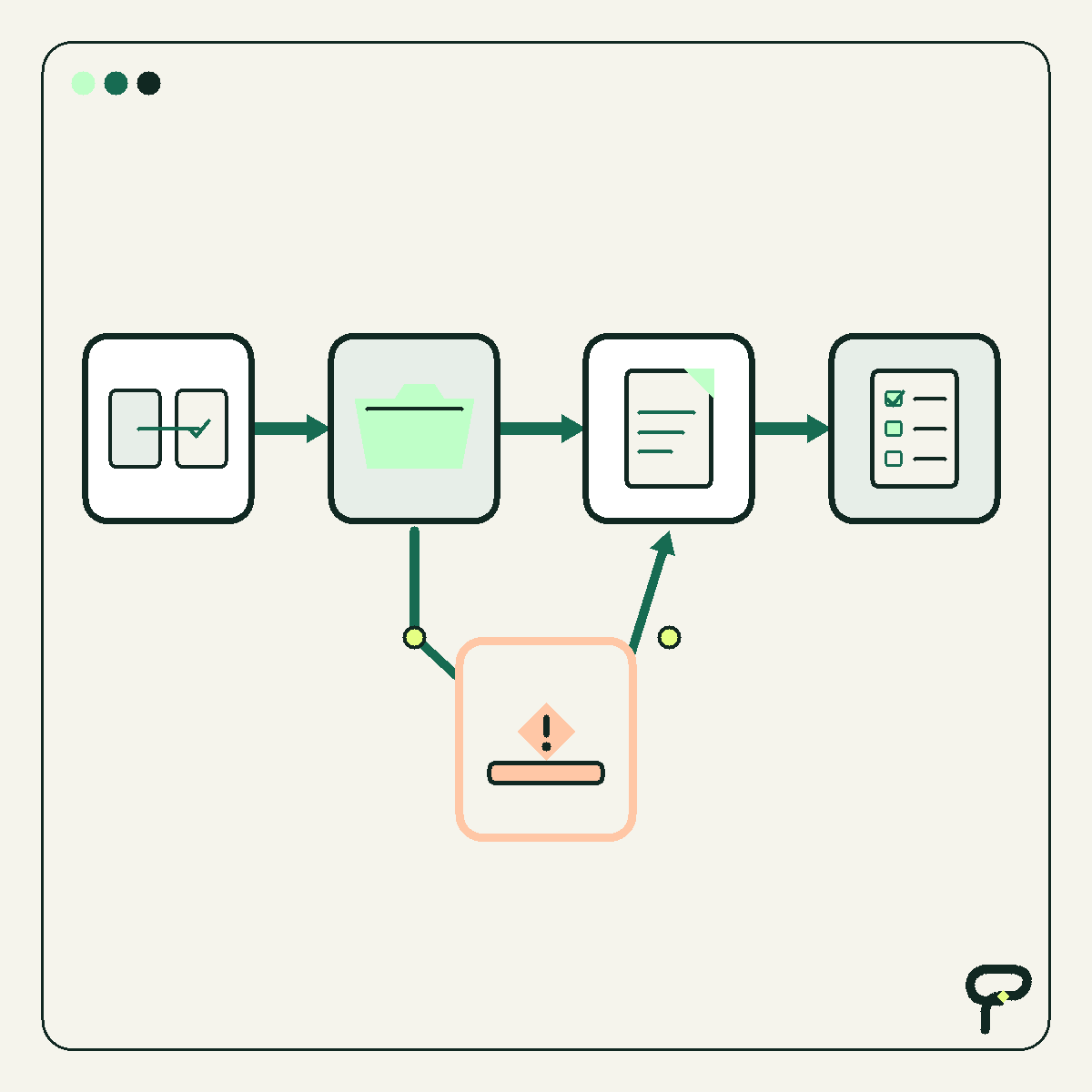
A customer gives you a new phone number. Someone updates the estimate, someone else changes the contact in the invoicing system, and the scheduling spreadsheet still has the old number. Each person completed the task in front of them. The workflow still produced three different versions of the customer.
That is the hidden cost of duplicate data entry. The visible work is copying and pasting. The harder problems appear later as rework, uncertainty, missed updates, and customers repeating information they already provided.
The goal is not necessarily one giant system containing everything. A more practical goal is one clearly designated home for each important fact, plus handoffs that point back to that home. The method below is Poygan’s analysis, informed by the database concepts of uniqueness, primary keys, and referential integrity documented by PostgreSQL.
Start with the cost you can observe
Consider a hypothetical small service business. A customer’s name, email address, phone number, and service address are typed into an inquiry form, copied into a quoting tool, and entered again when the invoice is created. This is a synthetic example, not a report about a Poygan customer.
The problem is not merely that typing takes time. Every new copy creates another place that may need correction. When the customer changes an email address, the team must remember every copy, find it, and update it correctly. If one copy is missed, the records drift apart.
Drift makes routine work less certain. A team member has to decide which phone number is current. Another person may send a document to an older email address. A customer may be asked to confirm information that was already supplied. None of these outcomes requires a dramatic system failure. They grow naturally from maintaining the same fact in several places.
To find this kind of cost, follow one customer fact through the workflow. Ask where it first arrives, where it is typed again, where it can be changed, and which copy people trust when copies disagree. That short investigation is usually more useful than beginning with a software shopping list.
Choose a source of truth one field at a time
A source of truth is the designated place where the team maintains the authoritative version of a fact. That does not mean every kind of information belongs in the same application.
For example, a CRM might own a customer’s preferred phone number. An accounting system might own invoice status. A scheduling tool might own the appointment time. Those systems can exchange information, but ownership should remain explicit.
Database design offers a useful mental model. PostgreSQL documents that a unique constraint requires values in a column, or a group of columns, to be unique. It also explains that a primary key is both unique and not null, while a foreign key maintains referential integrity between related records. Those are technical database controls, but the underlying questions are useful for a small-business workflow: What identifies this record, which facts must not conflict, and how does one record refer to another?
This does not mean an owner needs to design a database. It means the workflow should have a stable way to identify a customer and a declared owner for each shared field.
- List the customer fields that cross between tools.
- Assign exactly one owning system to each field.
- Record who may correct the field and under what conditions.
- Give each customer a stable internal identifier when the tools support it.
- Treat copies in reports, messages, and documents as snapshots, not competing master records.
Carry a reference through the handoff
A handoff should move responsibility without creating a new identity for the customer. When a sales inquiry becomes a job, the job record should refer to the existing customer record whenever the software allows it. Reusing the record is safer than asking the next person to recreate it from an email.
This is where a customer ID can help. Names are written in different ways, shared email addresses exist, and phone formatting can vary. An internal identifier gives connected steps a stable reference. The identifier is not a substitute for human review when two records may represent the same person. It simply gives the workflow something more dependable than matching whatever text happens to look similar.
If the tools cannot connect directly, use a controlled handoff. Pass a link or record ID, specify which system owns the details, and tell the recipient what must be verified. A modest manual process can still be coherent when its rules are visible.
Use this source-of-truth checklist
Complete this checklist for one workflow, such as inquiry to estimate or approved estimate to scheduled job. Keep the scope small enough that you can inspect every handoff.
- Entry point: Where does the customer information first enter the business?
- Identity: What stable field or internal ID identifies the customer record?
- Ownership: Which system owns each shared field, including name, phone, email, service address, billing address, and communication preference?
- Edit rights: Who may change each field, and where should that change be made?
- Propagation: Which tools receive the updated value automatically, and which require a deliberate manual update?
- Conflict rule: If two values disagree, which system wins and who reviews the conflict? Equally important, when should the workflow stop instead of guessing?
Use this handoff checklist
Run this checklist whenever one person, tool, or automation passes customer work to the next step. It can be built into a form, task template, or operating procedure.
- Reference the existing customer record rather than creating another one.
- Include the customer ID or direct record link when available.
- Pass only the fields the next step actually needs.
- Identify the owning system for any editable customer details.
- Show when the source record was last checked if the handoff is time-sensitive.
- If required information is missing, return the item for completion instead of inventing a value or hiding the gap in notes.
Fix one loop before connecting everything
A sensible first improvement is the smallest loop that causes recurring confusion. Perhaps the scheduling spreadsheet keeps an old phone number, or invoice creation requires someone to retype the billing address. Map that loop before changing software.
Decide which system owns the affected fields. Then choose the lightest workable connection: reuse an existing record, pass a record link, configure a built-in integration, or add a carefully scoped automation. Keep a human review step for uncertain matches and conflicting values.
Finally, test ordinary updates as well as new records. Change a phone number in the source system and follow it through the handoff. Check what happens when a required field is blank, two possible customer matches exist, or the receiving tool is unavailable. A workflow is not complete merely because its happy path moves data.
The practical measure of improvement is clarity: the team knows where to correct a fact, later steps use that correction, and the customer does not have to maintain your internal copies for you.
Useful takeaways
- Duplicate entry creates more than typing work; it creates additional copies that can drift and demand later reconciliation.
- Define the source of truth for each important field instead of assuming one application must own every kind of data.
- Use a stable customer identifier and references to existing records when the tools support them.
- Make conflict handling and missing-information review explicit. Automation should not guess which customer record is correct.
- Begin with one troublesome handoff, then test updates, blanks, conflicts, and unavailable systems before expanding the change.
One next thought
If one customer detail is being maintained in several places, trace that single field through your workflow. Poygan Tech can help turn the resulting map into a focused integration, automation, or small application when a technical change is justified.
ONE EMAIL · PERSONAL REPLY
Let’s find the right first step.
Leave your email. I’ll reply personally and help you figure out where to start.